Best Way to Create a Non-quilted Insulated Jacket

Hi,
I have been trying to create a jacket in CLO using sheet-insulation rather than quilting and down fill. A good example of the look I am going for is this Eddie Bauer Evertherm jacket. There are 3 layers, shell, insulation, and liner. The insulation is stitched to the liner at the seams but not through the shell. The seams of the shell panels are seam taped like a raincoat. (a)
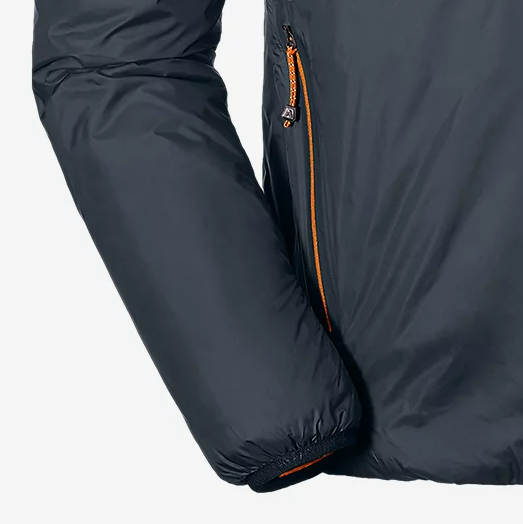
Having tried layering, a liner, a thick material (12mm) as insulation, and a shell using the set sublayer tool and the layer option as well, I am struggling with collision within the garment and unstable simulation. (b)

I achieved a decent rendering result using the fill tool (c) with the exception of the interior seams not being flat, and having that taped look. Also this method does not accurately represent the garment construction, as I wont be using fill.
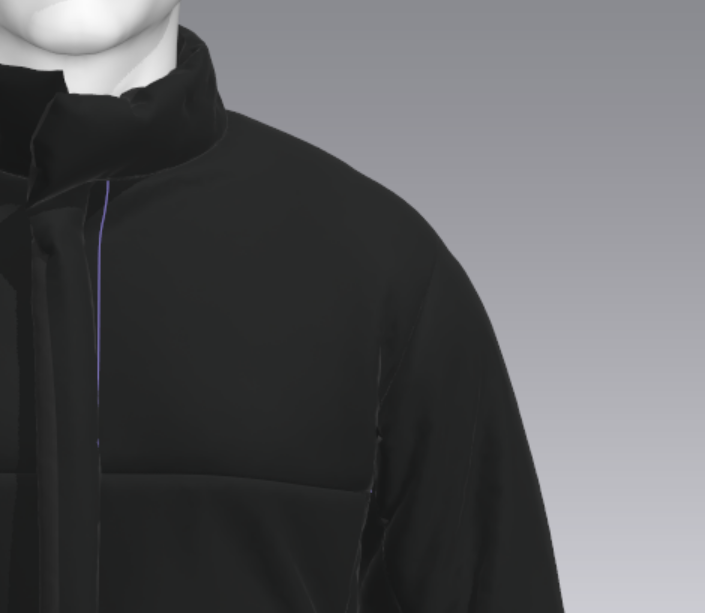
When I try to use the pressure function, rather than the fill tool, it inflates more like a balloon, since there is no quilting.
Any tips on achieving this construction/look with more reliable simulation results? Happy to provide more info if needed.
-
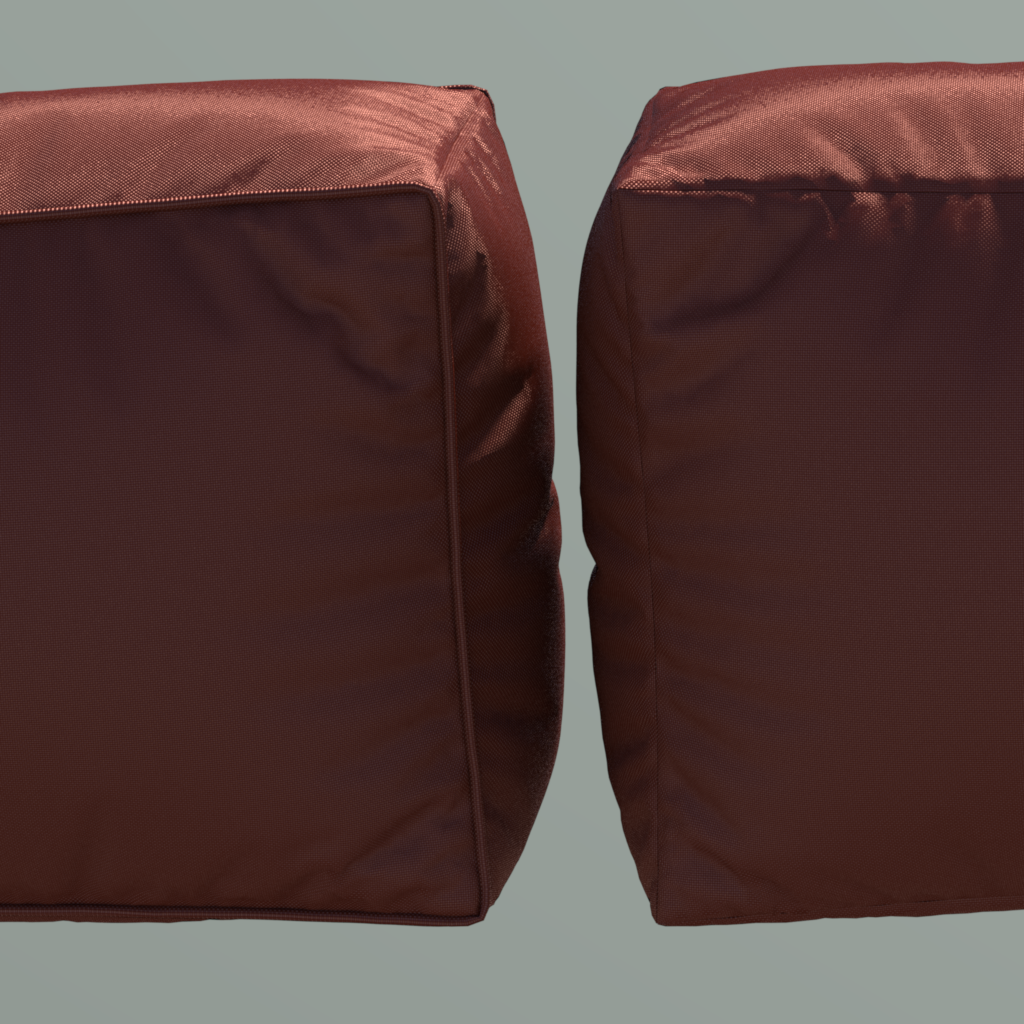
To get this nylon look you need combine both the texture and crease frequency across the assembly. For example below I have a nylon type weave that has micro-frequency normal (glint) distribution on a creased fabric that has high + low frequency 'creasing' using a custom nylon fabric preset that reflects crisp folding.
In CLO3D the inflate tool cannot simulate 'laminar' air flow between the thin nylon layer and the padding in the middle of the coat construction. So instead you need to use some tricks to fake that construction. I use a simple nylon preset over a thick (padded inner) that is created using the additional thickness collision value in the property editor. In this way you can create a pattern clone over the basic pattern (the thin nylon) and then raise the warp/weft percentage to something like 103% to get the nylon creasing at the seams. Then switch the layer underneath to >> hidden / invisible << with additional collision thickness equal to the padding in the coat you want to simulate. Then when you render you will not see the layer underneath nor the poke through. Use the CPU to simulate the final garment as that will give a higher quality crease simulation.
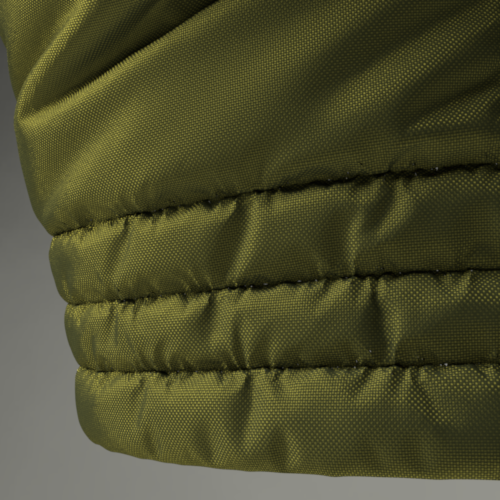
Note: these nylon fabrics actually have a micro-facet shimmer based on the actual weave of the nylon. This is a type of custom rendering technique that may require you to look outside of vray.
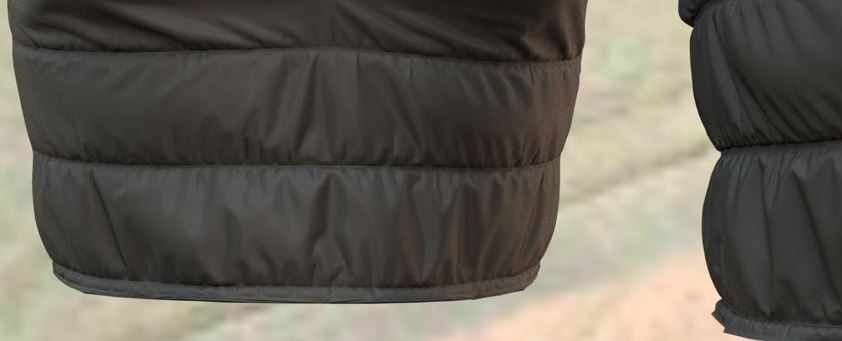
Note for technically correct nylon rendering vray does not have a shader type that can provide the normal distribution for the 'glint' that fine nylon fabrics create. So for that reason I opt for another render engine when creating photoreal close ups of nylon fabrics. Unfortunatley some most PBR shaders are not geared to fabric weave construction.
 0
0 -
Nice, thank you... good call on hiding the insulation layer.
0 -
Experience ;-)
>> This is actually what you want ( see down vest coat example - page 7 - (c) in pdf document ) however CLO3D cannot simulate this (yet) hint, hint, ...clo3d technical team? See technical paper on modelling friction and air flow between fabric and wadding with simulation computer code breakdown. >> VFX research paper
0
댓글