Warning displaying: 'The following patterns can not be remeshed due to complex shapes'

Hi CLOmmunity,
I'm working through a style with challenging layers and paneling. I'm also simulating the effect of an internal seam allowance on the sleeve paneling.
I'm having trouble with the warning "The following patterns can not be remeshed due to complex shapes'. I've dropped the PD down to 2 but still having a number of issues. I can't find anything in the forums or documentation on why this is happening - can anyone help?
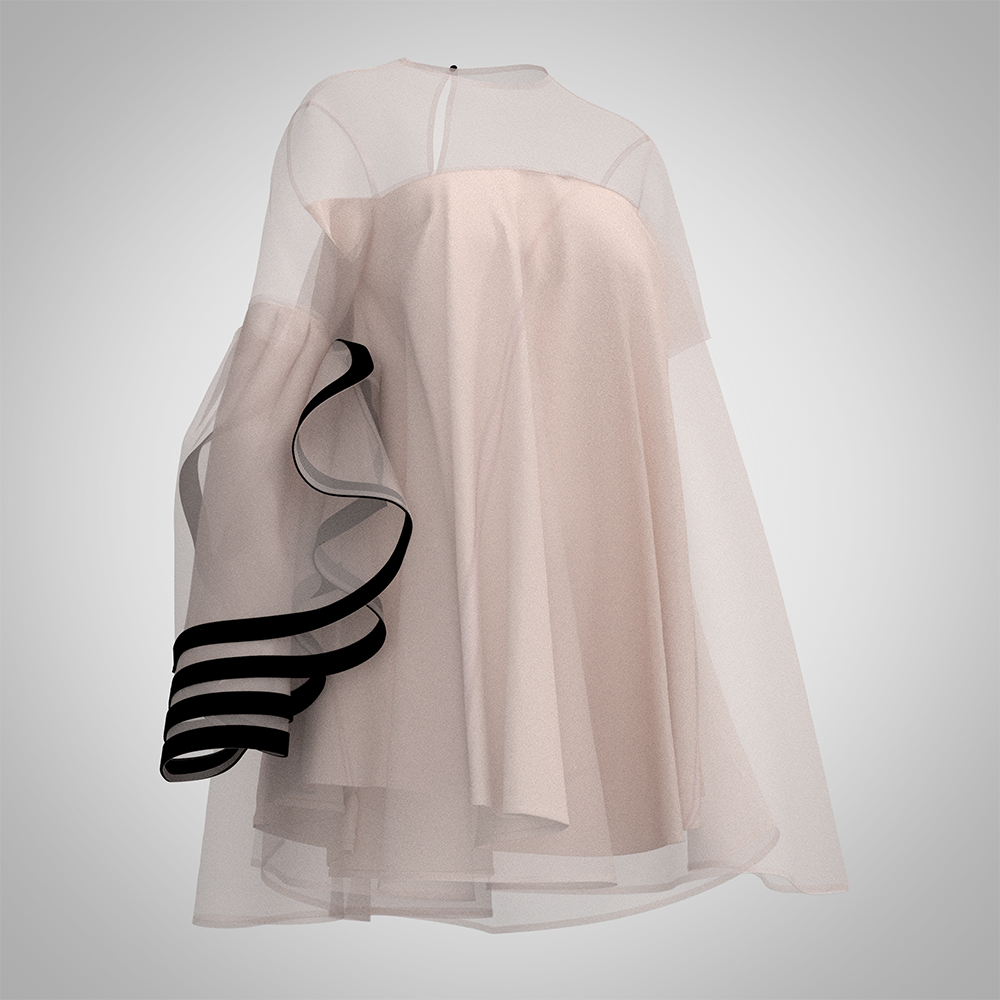
CLOSET link to the project is here: https://style.clo-set.com/style/aae4c18d3bc745b2a5f1f81d6af32727
:) Brendon
-
Brendon you don't need particle distance 2 for that garment. That is overkill.You will get a good draped simulation by being much better organized in how you proceed with mesh subdivision in localized areas only. This is why the quads algorithm is throwing up the error message. Basically it's choking on the shear volume of triangles you are wanting to convert. The lowest you should need to go in general for large areas of cloth is 5mm. And even then you could likely keep some areas of drape higher.
For fine detail you can use the localized function of adding in additional mesh detail at smaller particle size on a pattern with the shirring option on pattern pieces. This can be set to work for an area of simulation close to a seam at very fine particle distance, and will convert to quads well.
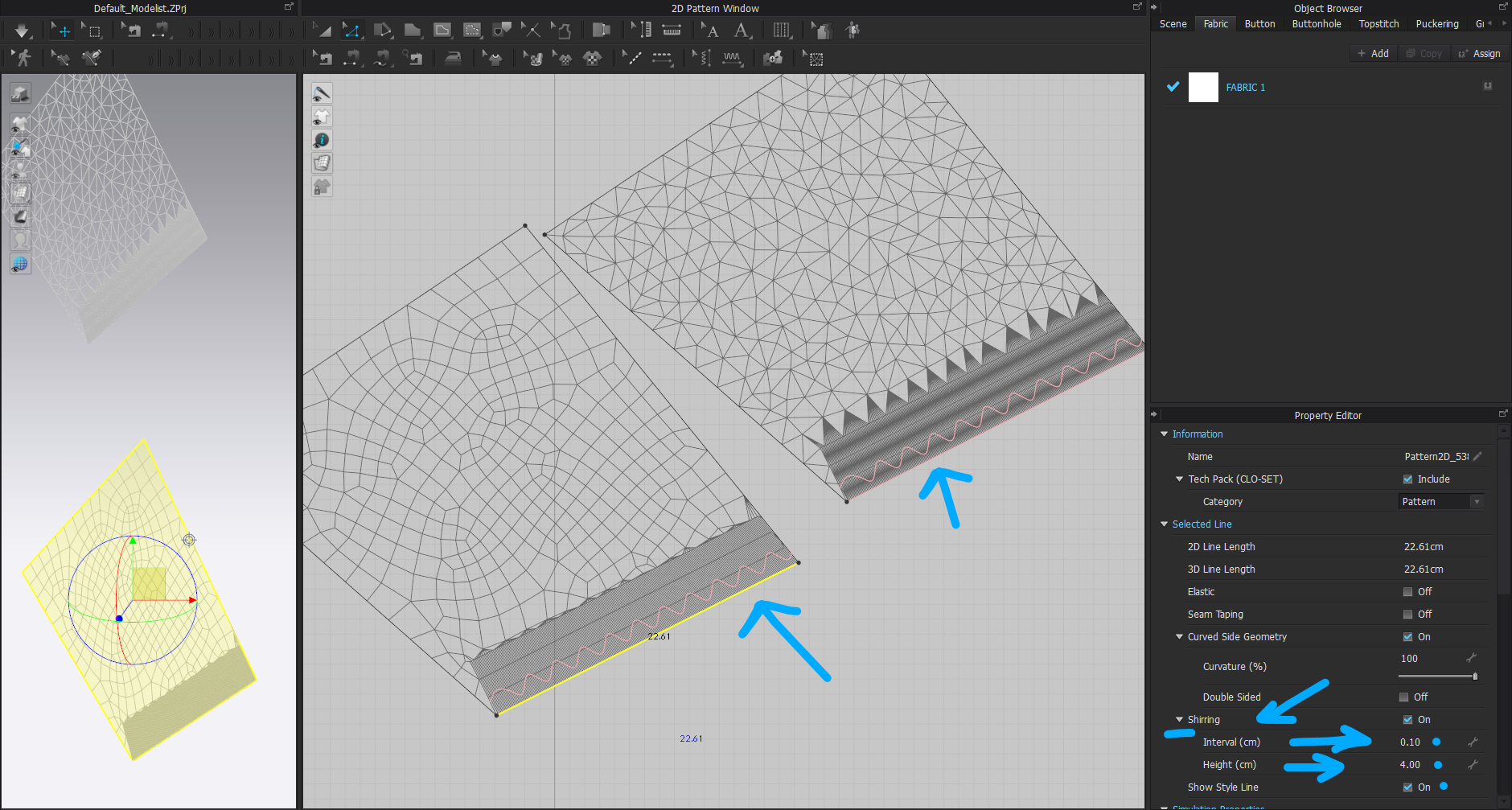
I would suggest you use this feature in areas when you need small particle simulation, rather than overall 2mm particle distance - which will basically render you garments and work process - unproductive. If you are having to use 2mm particle distance - it means you failed the garment build test with CLO3D. So time to rethink your assembly and simulation process.
What you should do is use the high poly count of mesh distance only where the creasing pitch distance needs to be reduced (eg: seam edge shirring) which is far more economic and technically better from the quad performance level of mesh subdivision when using catmull-clark subdivision algorithms, as you are getting an average between mesh faces. If you do that at fine quad size in CLO3D you are bashing that into the primary mesh surface under the physical simulation with no real ability to improve surface drape quality at the feature level (eg: creasing between seam junctions) - which can give surface ripples when later divided outside. So that is maybe a very bad thing, and poor work process as it is not elegant when working towards sub-division where it technically matters in refining garment detail.
Use the tools at the right scale they were intended for and you will find computation performance, surface quality and build time will all magically improve - that's a win-win-win. At the moment you are doing the wrong thing - which although might appear to be higher quality is in fact lower productivity, poorer speed - with algorithm choke points, less control of smooth surfaces downstream and fine creasing compromise.
You can set your tolerance here to then run a general overall simulation quality drape for high quality sim.
 0
0
댓글