PATTERN IMPORTING - All factories I have worked with have had major issues when importing my patterns. HELP PLEASE.

Hi All,
I have been using Clo for about 5 months now and I have worked with 6 different factories during this time. None of them have been able to use my digital patterns. I have reached out in the past on this forum and the answer always seems to be "them". The factory is not importing correctly or they are using too old of a system.
I just can't accept that answer anymore. I have used Gerber for the past 10 years and never experienced this issue. Below are a couple of screenshots from the latest disaster. The first screenshot is what I see. The 2nd is what the factory sees when the import the dxf files.
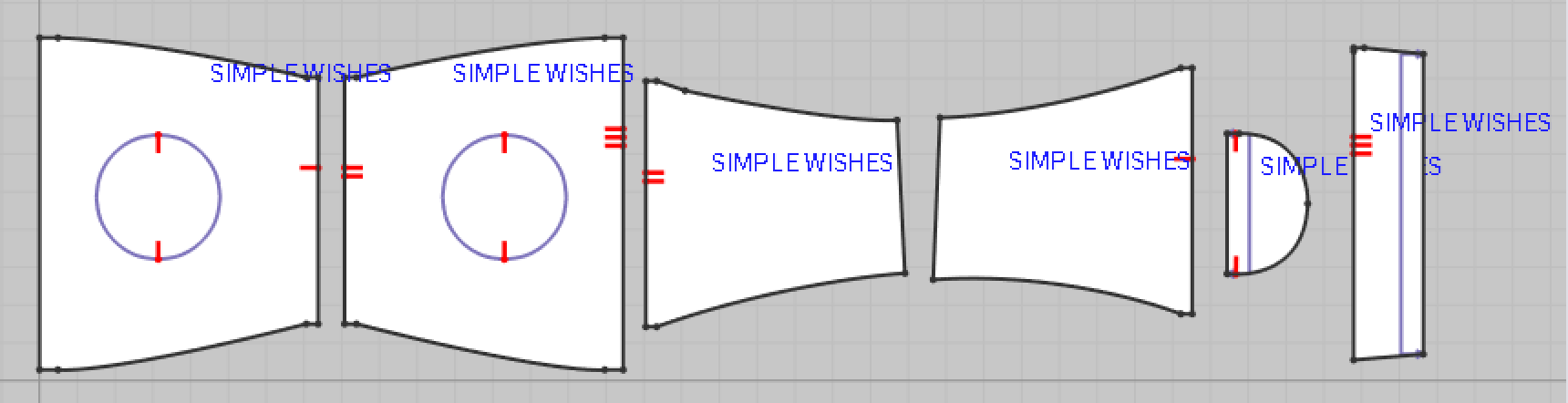
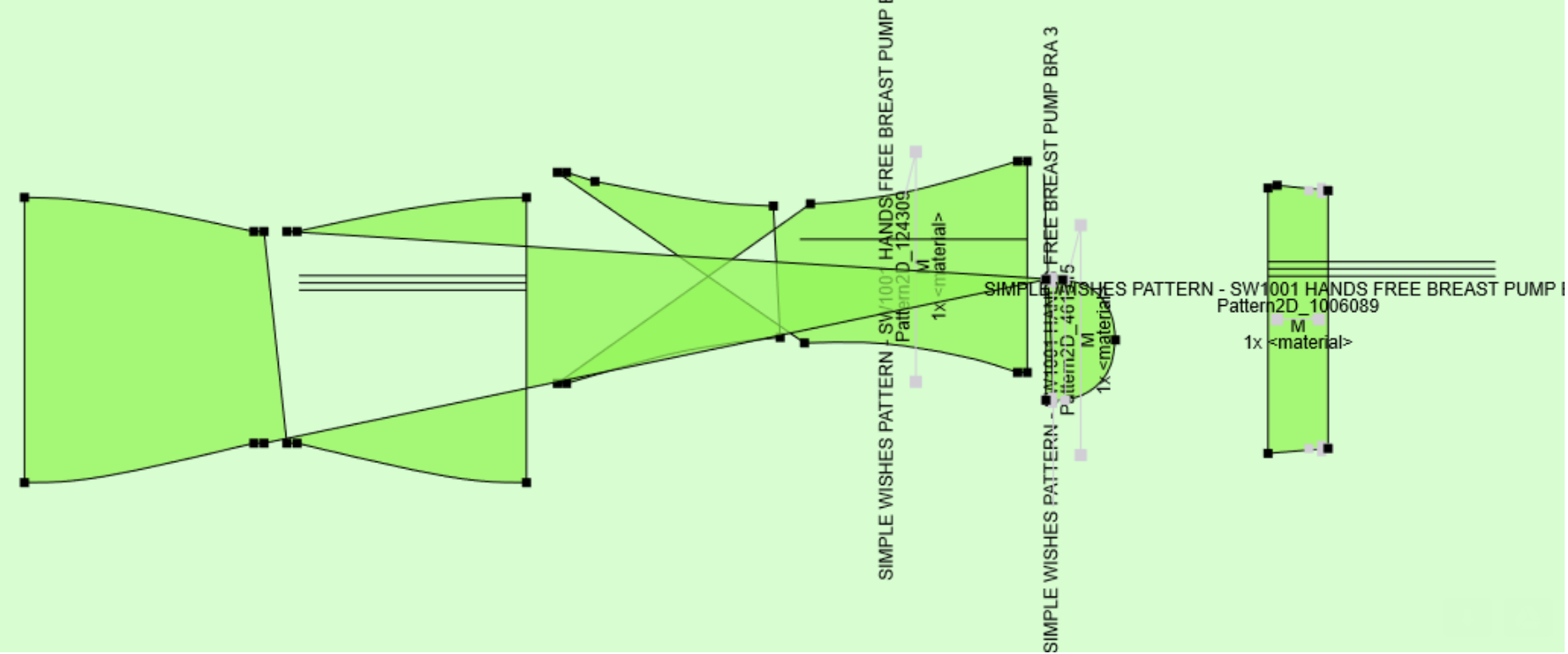
If I am doing something incorrectly when exporting I would love to fix it! Any idea?
And if the answer is that the factory is importing incorrectly again then why is it so hard for an established factory to import the Clo patterns? Does there need to be some kind of handout we send with Clo patterns to help a factory import them? Honestly, though, this does not look like an import issue to me.
Best,
Lori
-
Hey Lori. Hard to give you any advise without knowing what software, what options and other settings are these factories using. I suggest you try to import the files using a different CAD software just to test. You could get a free trial of PAD System at share.padsystem.com and import it as DXF-AAMA and see if something is not coming right.
P
0 -
Hi Pablo,
I reached out to the factory yesterday and am waiting to hear back regarding the software they are using.
I followed your suggestion too and imported the pattern into PAD Systems. Everything looks perfect!
I have already lost a factory because of these import issues. I went back and forth with them for weeks and I had many phone conversations with their operator. They were using Gerber, an older version, and the files never imported correctly. We finally cut ties with them and re-sourced with a new factory. It's hard because factories are going to be using older systems 90% of the time.
I need a resource to provide factories with if it is this hard to use the digital patterns I am sending them. Is there any resource available? I do not know how to help them or what to tell them. From my end, I'm not sure what options they would have to choose to get the results they are getting. It does not make sense to me unless the Clo system is simply not compatible. Any help would be greatly appreciated!
Best,
Lori
0 -
It's an import issue with Gerbers setup. CLO3D files work fine. People at the other end (suppliers) need to know how to set up gerbers many features for importing. Most are not properly trained in the DXF-AAMA import process or in how the DXF-AAMA exchange standard works. And consequently they get it wrong, opting to just push a buttons and not read through the options to get a file in.
I suggest you post the CAD file so it can be checked by someone whom knows how to import DXF-AAMA because they have been professionally trained in that process. Usually a CAD operator is only trained in one software, by the vendor and has little experience outside of what they do as a training course. File exchange is a more technical area, usually the domain of the CNC operators whom deal with the data-file structure, layering and polyshape integrity.
A good CAD CNC operator trained in data file exchange can usually write a driver if needed. Your average CAD draftperson (vendor trained) wouldn't have a clue how to do that.
Look to the DXF-AAMA standard(s) old and new and exchange options (old and new). Then in future have a test file you send with every contract that you get checked for import before you start work with a supplier. Many never get datafile exchange right, or they drop detail (eg: Chinese characters notes/by not resetting the keyboard) or silly things that they leave out as part of the file exchange control process with the CAD files, and it is often 99% of the time operator error (on both sides) and not a glitch in the software.
CLO3D files appear to import fine to optitex, gerber, brozwear, when I use them so I can only conclude it's operator error.
0 -
Right, but then what can I tell them to help them access my files? Gerber is supposed to be compatible with Clo so there has to be a way to fix the issue. What is the fix?
1 -
Hi Ottoline,
I can see via email that you had replied to my message above but I do not see the comment here. Perhaps an administrator deleted it. You did have one potentially helpful comment in what you sent me:
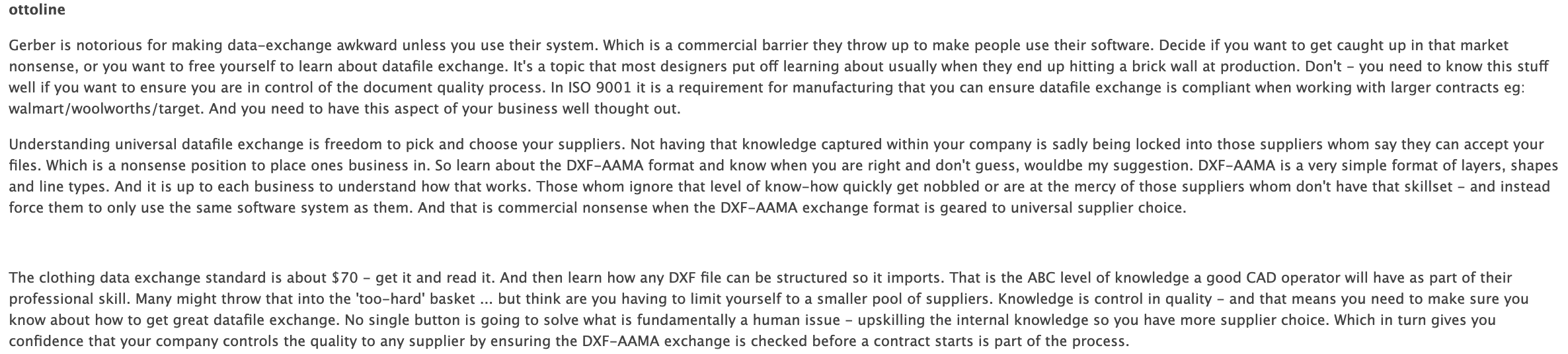
"The clothing data exchange standard is about $70 - get it and read it. And then learn how any DXF file can be structured so it imports."
However, when I do a search for what I am assuming is a book, I cannot find it. Do you have a link you could send or know the author?

 1
1 -
No I deleted the comment(s) as the forum post process also (usually) sends a copy via your email immediately after it is posted.(As I can see you have now reposted)
So rather than leave long targeted messages up on why you should have an inhouse process (eg: ISO 9001 for technical file cad document control) for this > I suggested it's better to just post the datafile you have the problem with so it may be checked by some in this forum > as you only show pictures.Which is impossible to help you with when it's a datafile issue that needs to be explored.
The dxf file needs to be opened up , looked at in detail with a text editor, along with the original CLO3D file.
No administrator took down the post.
I did.
American Apparel & Footwear Association
Good DXF file exchange is not a technical barrier. It's an opportunity to rethink how you cope with many suppliers whom are varied so that you have a robust tolerant system in place that reduces your costs and risks in supply management through documentation, edits, revisions, and technical file control. It should not be manual in today's market space, it should be automated - which it can be. The challenge is you should be able to get your CAD data to any supplier, no matter whom they are, and that you processes does not omit good quality garment makers. It's not their CAD process that should govern your quality, jump over that simple barrier - as it could limit your supplier choice and that is bad business thinking.
Post the problem file(s) > so they can be looked at in detail. Might be a good 1st step. 6 months is a crazy amount of time to have had this issue, when it is likely solved in a few minutes.
-2 -
I received confirmation today that this particular vendor is using the CREA Cad system. I had exported my files as DXF AAMA.
The only files that can be posted on this forum are jpegs, gifs, or pngs so I cannot post the actual pattern file. Thank you for sending the links! I am 100% willing to educate myself if it would be helpful to work with these factories overseas more successfully. I've been in the industry for over 10 years and never needed this information previously. It had been a non-issue with Gerber.
I appreciate the help.
Best Regards,
Lori
0 -
My pleasure. 10 years only, that makes you a green-horn. A lot of what I do touches on ensuring businesses take the right approach, and often that means - prodding some departments, to wake them up to the realities of where performance + up-skilling can make a difference.
Having a great understanding of how to translate files into any CAD system is a 1st class skill to have. First of all it lets you know when your supplier is feeding you BS, and looking to escape out the side door of responsibility, generally because they have cut corners, hired people whom don't know how to do this translation properly, or have CAD systems that maybe are not so integrated ... and just hope it all works. Which in manufacturing is usually never the case, it is all about resolving small issues , before they become big clangers, and ensuring the flow of data quality is consistent without getting stressed. Knowing you are in control of this aspect means you are empowered to approach more suppliers, which takes away risk from being locked in to only those makers whom can use gerber. So widening out your choice of suppliers is a big commercial win for you - so well done. Good digital strategy.
CLO3D is well placed to bolt in alongside other 2D CAD drafting systems. In this manner it offers up what must be the best 3D garment assembly simulation in this solar system at this point in history. So you are definitely working with the gold standard application in this area of CG cloth simulation. So that is ground worth fighting to retain. And because CLO3D is focused solely on this sample making task, it brings simple toolsets that make it a joy to use. It's flexibility is that you can bolt in other 2D fashion CAD - using the DXF-AAMA or DXF-ASTM file transport as your bridge to other wider manufacturing/development eco-systems scaling your production up or down as you need. So in that context knowing about DXF is important to you and your company as a point of reducing friction as you change the way you integrate for different needs. That is growth. So I cannot stress that enough - it's not something fashion designers can brush off as, icky or place in the too hard basket. It's important and it secures how you can cross over with suppliers with confidence. And that is the goal of any business to make sure they have a friction free ride as they roll out production. And knowing you have it right is peace of mind for the management of any production run you make outside of your normal channels of making. So well done, sometimes it's good to get outside of Gerber software eco-system ... as it makes a business less reliant on technology lock-in. That's a win right there.
Good luck.
-1
댓글