Folded cuffs keeps turning inside out in simulation

Hopefully someone can give me the reason why this happens (a lot) and what to do to prevent this.
For cuffs, but also collars, I've used the Fold Arrangement tool to fold the cuff inside, with Fold Rendering on. Next step is to sew the top and bottom of the cuff to each other, so the cuff is closed. The front of the cuff is blue, the back is white (to make it easy to see the difference).
What's so frustrating, is that when I put simulation on and pull on it to straighten things out (or, it also happens when I superimpose something under), the cuffs flips inside out very slow.
What am I missing here or doing wrong?
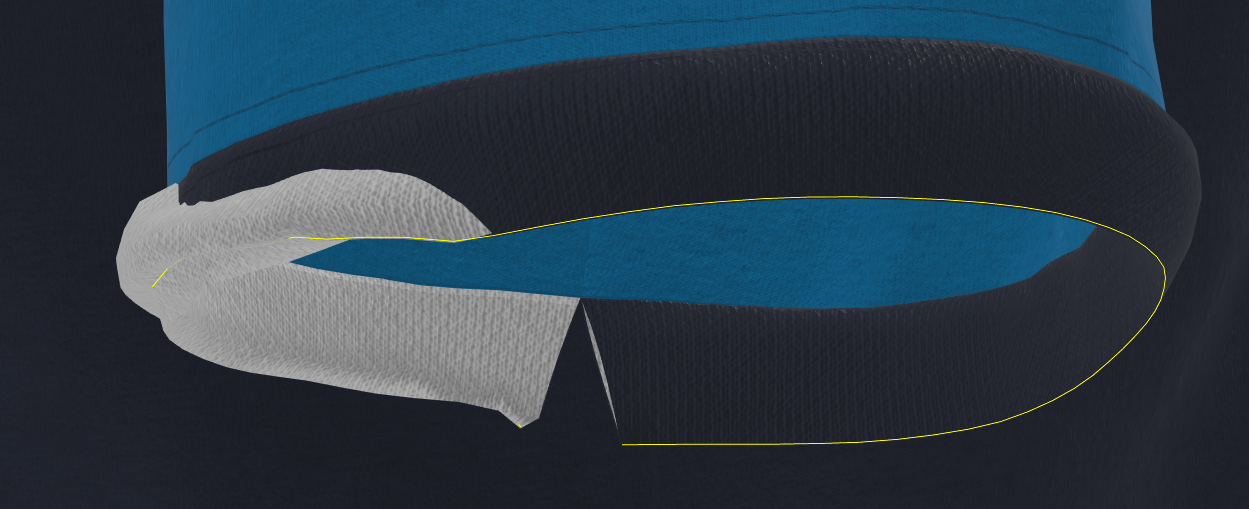
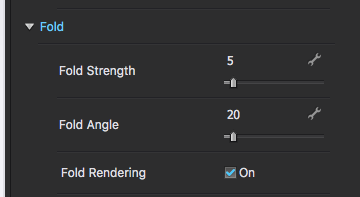
-
Forgot to mention... The sewline of the top to the bottom of the cuff has been set to a Turned Seam.
It just looks like if you pull too hard on the fabric, the whole thing turns inside out.
0 -
In addition to turned seam, click "Set Sublayer" to on, and chose Sublayer "Back". You want this edge sewn to the *back* of the other edge. Ignore "Reverse Direction" because in your case the seam is sewn back to back and direction doesn't matter. (If ever you are sewing right side to wrong side, you might need to watch the direction, too. It's also depicted by an arrowhead on the line connecting the sewn segments.)
This helps a lot, but it's still possible for layers of mesh to get entangled, especially near the fold.
2 -
Thanks again jne4sl! Didn't know that option either.
I'll try it and if it still doesn't work like I want to, I'll try a trick I saw on youtube (https://www.youtube.com/watch?v=dIzd_-QpTvY&feature=youtu.be); make halve of the cuff and double it up with layer clone under.
Have a great weekend!
0 -
Hi annecworx. I would suggest Strengthening the cuffs before folding/rendering them. Once they have settled in the render then remove strengthening. This should help to keep the right side of the fabric on the outside
0 -
Yes, layer clone is good, but I'm usually working with an existing pattern, and I'd like to use it as-is whenever possible. Sewing lines default to "Front", which is why many people only layer things front on top of front. If you then flip the normal of the under layer, the sewing line is flipped appropriately, too, so it works even if you're unaware of that detail.
0 -
Thanks CLO Designers for the tip about strenghtening. That's what I usually do when I fold the first time and it works like a charm. It's just that sometimes when I have to place something in the same area it starts to act up.
jne4sl I understand that you would want to use the pattern as best as possible. My goal is a bit different since I'm more focused on the presentation and the garment looking as perfect as possible. If I have to tweak the pattern a bit to make it so, than that's what I'll do ;-)
0 -
Yeah, but then you might be better off using a single layer and simulating the thickness and edge, as opposed to hiding the seam you've introduced along the fold by layering. There's always a tradeoff or at least a choice to deliberate. If you're getting mesh rot along a seam, not the fold, force the sublayer of the sewing line to fix it. Along a fold you might need to strengthen/re-drape.
1 -
jne4sl Using a single layer and simulating the thickness and edge is exactly what I've done now, and it looks good in my opinion. And with a lot less frustration. Thanks for your advice!
0
コメント