Fabric matching question

Hey guys, I'm working on a reproduction of a movie costume and the fabric they used is some rare one of a kind wool based fabric completely bought out for the film. I was wondering what some of your recommendations would be for a starting fabric to use for this. Here are some pictures I found of the costume naturally draping off hangars.
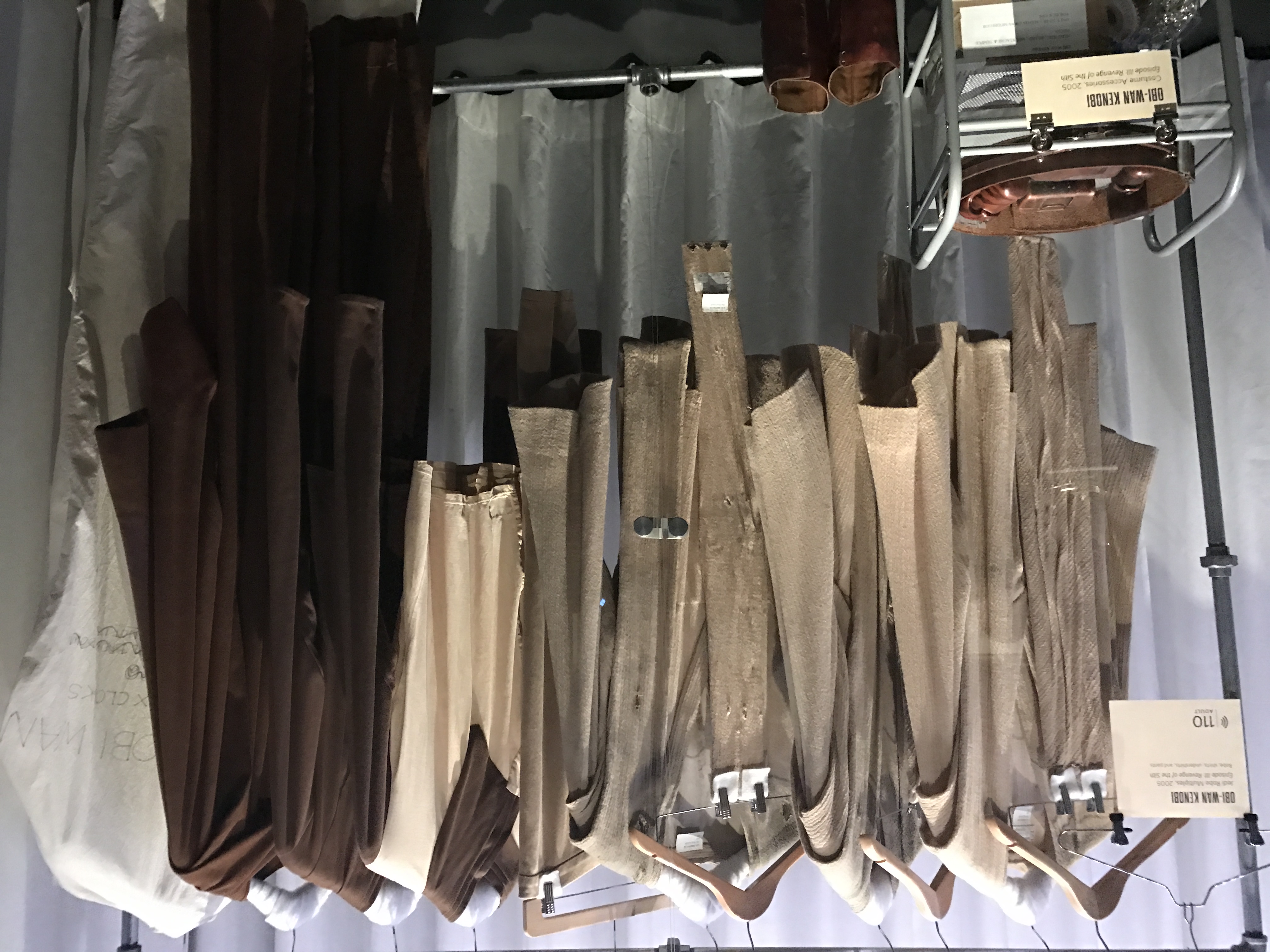

-
Knitwear or fabric?
0 -
to me it seems like some kind of knit / gauze like fabric
0 -
It's maybe a fabric with a crinkle in it. When you test fabrics with the CLO3D emulator it's hard to do those types of fabrics as they have 2 frequencies of stretch, one that is associated to the warp/weft and the other to the way it is processed to get the crinkle into the fabric. So when you test a fabric using the emulator it is stretched in the jig to gauge the force as a start point, which means the secondary crinkle (post processing) is effectively not calculated in the preset for the weave. This is a problem of the CLO3D emulator approach for any fabric that has a post process crinkle that is larger than the woven warp/weft weave stretch scale - which in this case is the issue. For example the silk fabric for Issey Miyake also fits into that category of post processing that is unlike an unprocessed fabric. ( secondary micro pleating and crinkles )
So in these 'special' fabric cases that exhibit a post process 'crinkle' component in the fabrics physical behavior you really need to throw caution to the wind and not try to get too hung up on using standard fabric presets > time to get creative. It would be an good assumption to say that any tightly pleated or crinkled fabric will have additional mass (weight) per meter to an uncrinkled fabric, and that the stretch and drape will be radically different under animation. (it will expand around body limbs where they bend to a larger degree than a conventional fabric). One way to do the crinkle is to add in a normal map or displacement to give the surface illusion. However on the physical side there is not really a way to simulate a micro crinkle effectively at a low particle mesh distance - so this is where you need to perhaps use some artistic license and play around with some drape-o-grams to get something that works for your project.
In the past I have used normal maps to get my micro crinkle visual effect, and then tweaked the fabric preset towards knit-wear to get a more generous stretch. Neither will be accurate but you will likely get away with some artistic approximation to fake what CLo3D cannot do physically - yet.
0 -
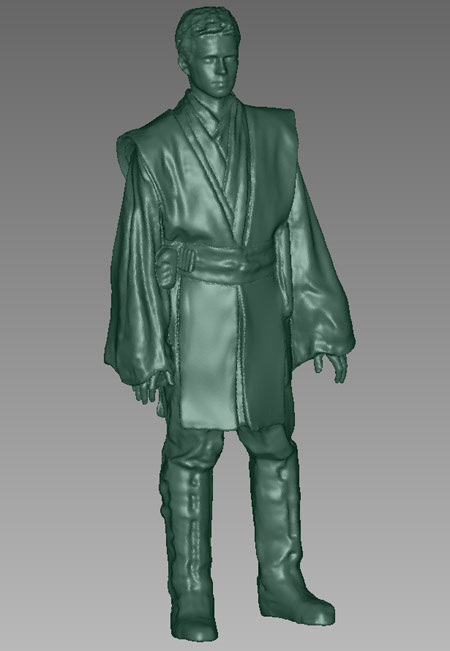
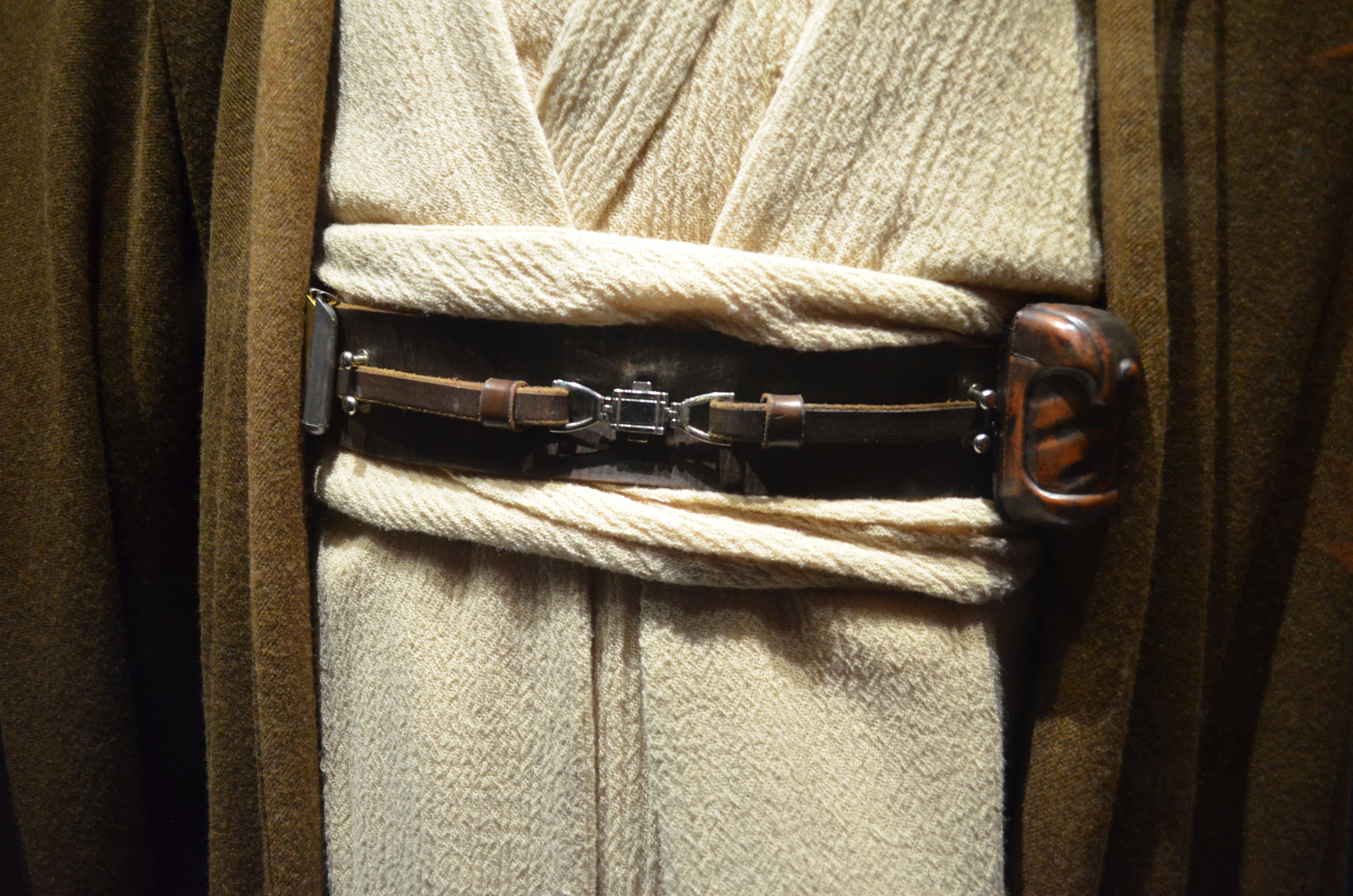
hey ottoline thanks for the reply. I found this picture showing a scan of one of the actors. The flaps are leather so I'm just using the sleeves as reference. Do you think using a layer clone and playing with the weft/warp there and keeping it invisible would be a valid way of faking it?
actor ref scan
 0
0 -
A clone layer won't help with the fabric itself, that would only be for the basic construction and drape you might do that (if at all). No the fabric texture needs to be done using the shader map options of the > diffuse, normal, gloss, depth, etc.
I would use the displacement map (Crinkle) and normal map in concert with each other to get both fabric effects, as the silhouette of drape is not showing the edge of the crinkle on the 3D scan so that is an immediate indicator you can get away with using texture shader map techniques, CLO3Dv6 now allows you to add in Adobe Substance textures so I would check out the range of fabrics they have online and then add in a secondary frequency to get the crinkle.Or CLO3D /CLOSET released 200 additional fabrics maybe check out one there and add in the crinkle.
At the moment I am away from my studio so I would normally just make this fabric using a digital weaving application. Or if I had a a sample to hand scan it.
Just create the garment construction as per the 3D scan model you show, then treat the micro-fabric surface as a texture exercise. The micro crease can be created to reflect both materials using the texture maps. And for the drape don't get hung up on a fabric type that CLO3D cannot simulate physically (eg: post processed micro pleating). Keep the main drape and fabric type (physical preset) to a wool for the tunic and for the undergarment go to a simple knit. Note in the 200+ additional fabrics that CLO3D/CLOSET released (free) there are a lot of new knits, many which appear suitable for the cream shirt drape physical preset. Then add in the micro creasing using a new fabric texture channel for displacement and normal mapping. A separate fabric texture exercise. That allows you to get straight into the project.
0 -
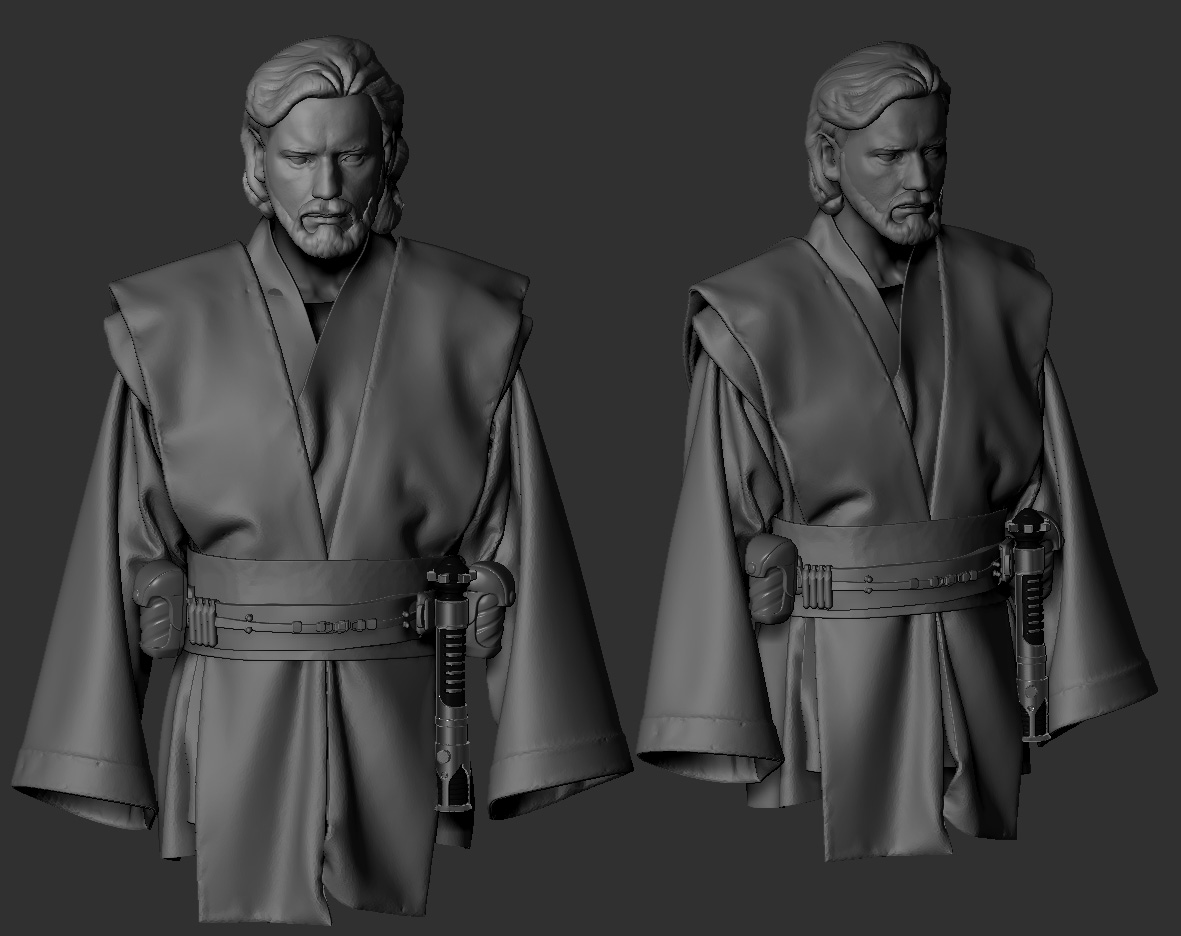
hey ottoline, the drape is what is most important for me. I'll be doing all the texturing in zbrush because I will have a tighter level of control over it and at the end of the day this will be 3d printed maquette. Playing with the wool and knit I kind of got close. This is just a test to see what it my pattern looked like when I added hardware and stand in actor head to start comparing it to the movie. I still have to fit the pattern better and get the drape to have that fuller feel. If my pattern making skills were better you can see that clo today gives better results than scans from 2002 which is cool.
 0
0
Comments