SO MANY PIECES PUSHING EACH OTHER

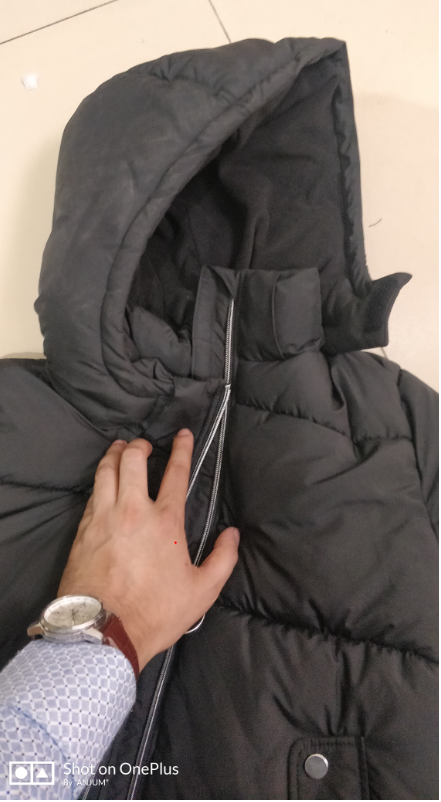
When i am going to make hood part the pieces pushing each other in clo,any solution for working with many layers?
-
When i am going to make hood part the pieces pushing each other in clo,any solution for working with many layers?
 0
0 -
Hi alirabby, in this case you can use layer clone option.
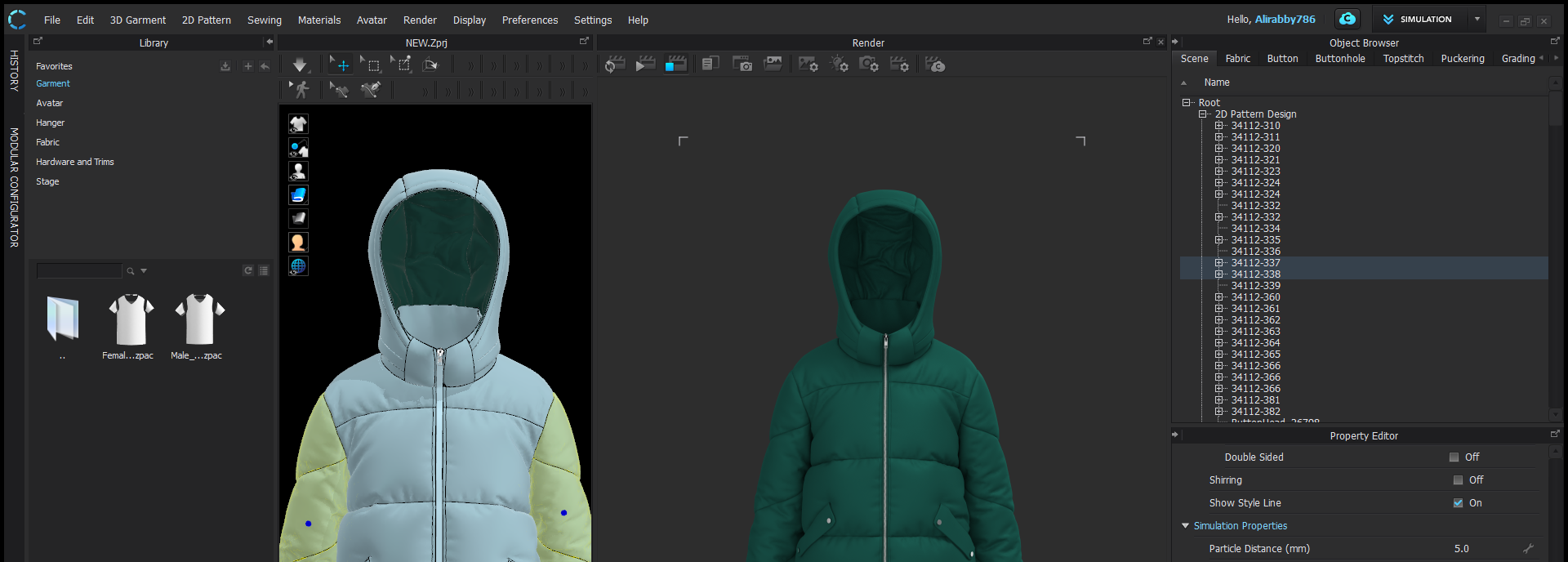
I usually create the outside then duplicate it as layer clone under. The pieces get automatically sewed together on the perimeter and each internal lines.( if needed, you can remove the sewing lines you don't need) adjust the pressure value to obtain the puffy effect, ( positive for the external pieces and the negative equal value for the inside ones) for this there isn't a golden rule, is more avisual effect.
To avoid collision is also good to increase the particular distance to 5 and in the bulding process increase the add thickness collision for the involved pieces up to 5 or 6.
When the simulation is stable you can lower this value ( teh default value is 2,5)
When you have the wanted resul freeze the parts, they will be rendered normally.
I hope this helps you.
Daniele.1 -
Great answer Daniele!
0 -
When making quilted or padded nylon coats, I always use the clone over pattern as mentioned by daniele with additional offset. But what I also do is add in another important step for all quilted patterns I increase the outer cloned patterns warp/weft scale slightly to 103%. And to create the secondary frequency for all the correct pucker at the seams, I generate a flat pattern duplicate, and simulate it alongside my main garment assembly, using that flat form to bake down externally to create a normal map for all the seam stitching and creasing at greater detail. That then allows me to place that normal map back into the 3D assembly pattern as a single texture map in the normal channel to update the creasing quality.
All coats and jackets are generally made as quilted panels in production before they are assembled. So that is exactly the same process I use when I simulate a padded coat. This is important as in CLO3D you will not get the quilting pucker detail correct if you don't follow the correct construction process. You will only have one level of crease frequency and this is why nearly all of the CLO3D padded coats in nylon are consistently missing the textural detail. People are simply only simulating one level of frequency (taking a short cut) - which is NEVER the case when you break down how a padded coat is actually constructed.
The fine seam puckering comes from the 1st level of machine quilting process. And unless you place that into your assembly and simulation process - it will also be missing.
0 -
Thank you so much guys
huge help
 0
0
コメント